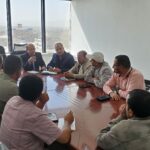
Coalition of Relief and Building holds a staff meeting to discuss its 2026 project plans
January 1, 2026Saudi Arabia Leads Humanitarian Action Regionally and Globally
January 20, 2026
As the year 2025 comes to a close and a new year begins — one filled with hope and responsibility — Coalition of Relief and Building (CRB) stands at a defining milestone in its humanitarian journey, marking a decade of ceaseless work amid one of the world’s most complicated humanitarian crises. Ten years of survival stories and faces of hope, during which helping hands reached out to alleviate suffering and safeguard the dignity of the Yemeni people in the darkest of circumstances.
Since 2016, amid worsening living conditions, widespread displacement, and the collapse of basic services, CRB chose to be present where needs were most acute. It gradually transitioned from emergency response to sustainable development, placing people at the center of every intervention and affirming the belief that humanitarian relief is not the end of the road, but its beginning.
Between 2016 and the end of 2025, the Coalition of Relief and Building (CRB) implemented more than 672 humanitarian and development projects across 19 Yemeni governorates, contributing to improved living conditions for over 6,169,805 of the most vulnerable beneficiaries, with the support of local and international partners. These projects spanned vital sectors central to daily life, including food security and livelihoods, shelter, water, sanitation and hygiene (WASH), health, education, and protection, alongside institutional development programs and partnership-building initiatives.
Leading Interventions
The food security and livelihoods sector topped CRB’s interventions, responding to the sharp rise in hunger and food insecurity. More than 5,057,983 beneficiaries were reached through this sector alone, via emergency food assistance targeting families affected by conflict, displacement, and natural disasters. CRB also implemented seasonal humanitarian initiatives with profound humanitarian and social impact, including the distribution of food baskets during the month of Ramadan and the distribution of sacrificial meat during religious occasions.
With the evolution of its institutional vision, CRB has, over the past three years, increasingly focused on livelihoods enhancement and economic empowerment. It implemented 58 projects centered on vocational training, support for small enterprises, and the provision of production tools, enabling thousands of families to transition from dependence on aid to building stable sources of income that preserve their dignity.
In the shelter and non-food items sector, CRB addressed one of the most pressing challenges facing displaced populations, the lack of safe and adequate housing. It implemented emergency shelter interventions to provide essential shelter materials, alongside sustainable, long-term solutions. These included the construction of 79 housing units specifically designed for persons with disabilities, as well as the establishment of model residential villages comprising 254 housing units for the most vulnerable families. These projects contributed to creating safer living environments, enhancing household stability, and reducing the health and environmental risks associated with inadequate shelter.
Amid the severe deterioration of water and sanitation services, CRB carried out targeted interventions aimed at restoring a lifeline to affected communities and displacement camps. These interventions included the drilling and rehabilitation of wells, the construction of elevated water tanks, the extension of water supply networks, the installation of sanitation systems, and the implementation of hygiene awareness activities. Collectively, these efforts improved access to safe and clean water, reduced the spread of waterborne diseases, and enhanced overall public health conditions for thousands of households.
In the education sector, CRB worked to protect children’s right to education at a time when schools had become inaccessible for many, particularly in displacement-affected areas. It implemented emergency education projects that included the establishment of temporary and alternative classrooms, the distribution of school bags and uniforms, and the provision of education-related cash assistance, enabling thousands of children to continue their education despite formidable challenges. CRB also implemented sustainable education initiatives focused on the construction and rehabilitation of schools, their furnishing with essential educational equipment, the delivery of vocational and technical training programs for youth, and the establishment of training centers for girls. These initiatives fostered safe and sustainable learning opportunities and opened new horizons for the future.
In the health sector, CRB’s interventions served as a lifeline for many families through the implementation of programs aimed at saving lives and improving access to essential healthcare services. These interventions included the operation of mobile clinics in displacement camps, the provision of medicines and medical supplies, and emergency health responses. In addition, CRB established, rehabilitated, and operated health facilities, equipping them with specialized medical equipment—including dialysis machines. These interventions enhanced the readiness of health facilities and improved the quality of care available to the most vulnerable groups.
As part of its commitment to protecting the most vulnerable groups, CRB implemented a range of programs in the protection sector targeting women, children, and the most at-risk families. These programs included psychosocial support activities, the establishment of child-friendly safe spaces, the implementation of community-based protection activities within displacement camps, as well as the provision of cash and in-kind assistance to the most vulnerable cases. CRB also implemented child welfare programs for children without caregivers, including orphan sponsorship and the provision of their food, educational, and health needs, helping orphaned children move toward a more stable and hopeful life.
At the institutional level, CRB has, over the past decade, witnessed notable development in its administrative and operational structures. This progress has enabled CRB to enhance its implementation capacity, expand its partnerships, improve the quality of its programs, and strengthen the principles of governance, transparency, and accountability. These efforts have contributed to increasing the confidence of donors and local and international partners, and to consolidating CRB’s position as a trusted humanitarian and development actor in Yemen.
As the Coalition of Relief and Building enters its eleventh year, it affirms that this record of work and impact is not the end of the journey, but rather a launching point toward a new phase marked by greater maturity and impact. In this next phase, CRB remains steadfast in its commitment to placing people first, strengthening pathways to recovery and sustainable development, and transforming humanitarian response into a genuine opportunity to build a more dignified and stable future for Yemenis.